

All over the world, people are sensing that this is a time of change. Momentum is building. Do you perceive it? What are your thoughts on all the developments in the news? Are they just random or causal? Consider the technological changes, the vast number of people migrating to other countries, the weather events, the political and cultural upheaval, virulent disease, and the fear and anger expressed by numerous people. Paul said that “the whole creation groans and labours with birth pangs” that will continue until … an appointed time. (refer to Romans 8:19-22). These things aren’t new; they have been cycling since Jesus ascended. But there is an increasing simultaneous intensity with these chaotic events that compel the alert individual to consider what Jesus forewarned.
“Jesus told them, “Don’t let anyone mislead you, for many will come in my name, claiming, ‘I am the Messiah.’ They will deceive many. And you will hear of wars and threats of wars, but don’t panic. Yes, these things must take place, but the end won’t follow immediately. Nation will go to war against nation, and kingdom against kingdom. There will be famines and earthquakes in many parts of the world. But all this is only the first of the birth pains, with more to come. “Then you will be arrested, persecuted, and killed. You will be hated all over the world because you are my followers. And many will turn away from me and betray and hate each other. And many false prophets will appear and will deceive many people. Sin will be rampant everywhere, and the love of many will grow cold.” (Matthew 24:4-12 NLT)
I suspect you could observe one week’s worth of news and then categorize local and world events under Christ’s listed happenings. In addition, there will be another huge change prophesied by Jesus and Daniel. Paul linked these changes to God’s sovereign election.
The last two study blogs on Romans focused on Israel’s past (chapter 9) and Israel’s current situation (chapter 10). Chapter 11 offers hope as it reminds us that God keeps His promises. And within keeping God’s promise, He inaugurates a sovereign climactic change in the redemption plan. His redemptive focus will shift from all the other nations (as a priority) to restoring the children of Israel. Since this has not yet occurred, we could say that Romans 11 is about the future of the children of Israel and any unregenerated Gentile individuals after a specific time.
This prophecy contains the doctrine of election and has a sense of urgency for us all! There is an appointed deadline for this event that will not only introduce the biggest change but will usher in great joy, beauty, and perfection to those who are prepared! It will also introduce distress for those who don’t heed the warning.
Study Notes Outline:
The following represents my segmentation of Romans 11. Clicking on each segment title will navigate you to the correlating section. This study will take about 75 minutes to read, so if you don’t have the time in one sitting, perhaps read them in segments or read the “lite blog” version which is less detailed.
- We See God’s Perspective Through Conversation with Him (Romans 11:1-6)
- Election within a Chosen Collection (Romans 11:7-10)
- Reconciliation Available to All People made Possible by the Rejection of the Chosen Collection (Romans 11:11-16)
- The Pardoned Should Have Reverent Humility because God Decided the Means of Global Reconciliation (Romans 11:17-24)
- The Appointed Time for the Partial Hardening to Cease (Romans 11:25-32)
- Brief Conclusion: Glory to God – God’s Plan Mystifies All of Creation (Romans 11:33-36)
Please grab your Bible to follow along especially since sometimes comments are made on each segment without necessarily quoting the passage under review. Everyone should read Scripture for themselves because only the Godhead is infallible! Additionally, there is the added benefit of reading from the version that ministers best to you.
We See God’s Perspective Through Conversation with Him (Romans 11:1-6)
Please read verses 1-6. The question Paul posed to the home churches in Rome was the natural question they would ask after reading about the failure of the children of Israel to accept the Messiah (Romans 9:30-33; Romans 10:3; 21). By this point in the letter, the reader understands God’s choice to (1) bestow grace to pardon someone through faith; or, (2) to execute justice by hardening someone in their choice to rebel against Him and remain in unbelief. The logical question is: “has God cast away His people?“ (Romans 11:1a).
First of all, Paul pointed out that he was a Jew from the seed of Abraham so clearly the LORD was in the business of saving Jews, although just a remnant for now. Paul’s response sounds like the prophet Samuel’s exhortation at King Saul’s coronation. At that time, the children of Israel wanted a human king (just like all the other nations) even though the LORD was their King.
Can you imagine what a great insult that would have been to the LORD? Yet, God is merciful to His children and sometimes allows them to learn by giving them exactly what they ask for if it serves His will. Is the LORD enough for you?
Just for a broader context, consider what Paul preached earlier in Pisidian Antioch (around 48 A.D.) before sending the letter to the Romans. It is written:
- “… “Men of Israel, and you who fear God, listen: “The God of this people Israel chose our fathers, and exalted the people when they dwelt as strangers in the land of Egypt, and with an uplifted arm He brought them out of it. “Now for a time of about forty years, He put up with their ways in the wilderness. “And when He had destroyed seven nations in the land of Canaan, He distributed their land to them by allotment. “After that, He gave them judges for about four hundred and fifty years, until Samuel the prophet. “And afterward they asked for a king; so God gave them Saul the son of Kish, a man of the tribe of Benjamin, for forty years.” (Acts 13:16-21)
The children of Israel had seen victories and losses in battles and even experienced oppression by the Philistines. In 1 Samuel 7:3 – 15, Israel had repented from serving other ‘gods’ or idols, and the LORD was faithful to deliver them from the Philistines at Mizpeh in 1050 B.C.
In 1 Samuel 12, Samuel presented Saul as the requested king to the children of Israel, and he reminded them of how God had chosen them, delivered them from bondage, and preserved them. He cautioned them about disobedience that would lead to discipline.
Then Samuel said, ” For the LORD will not forsake His people, for His great name’s sake, because it has pleased the LORD to make you His people.” (1 Samuel 12:22)
So even when things look ruinous, the LORD will intervene for those He has chosen because it pleases Him.
Usually, this involves allowing the elect to be in situations that cause them to call out to the LORD in repentance. (Just one example of this can be found in Jeremiah 29:10-14.)
At this point in Romans 11, Paul responded to his anticipatory rhetorical question with a reminder that he was a descendant of Abraham from the tribe of Benjamin and reminded them that God would never cast off Israel. Interestingly, both King Saul and Paul (formerly named Saul) were from the tribe of Benjamin. Regardless of who ruled over them, and whether they were dispersed or regathered, Scripture states that the children of Israel would always be a nation to Him. Refer to Jeremiah 31:36-37 and Jeremiah 33:24-26.
Both the leadership of the children of Israel and the average person (except those who repented under God’s effectual call) did not recognize Jesus is the fulfillment of the following Messianic promise:
- “For unto us a Child is born, Unto us a Son is given; And the government will be upon His shoulder. And His name will be called Wonderful, Counselor, Mighty God, Everlasting Father, Prince of Peace. Of the increase of His government and peace, There will be no end, Upon the throne of David and over His kingdom, To order it and establish it with judgment and justice From that time forward, even forever. The zeal of the LORD of hosts will perform this.” (Isaiah 9:6-7)
Before Paul was converted, Jesus and Nicodemus (a Pharisee and ruler of the Jews) were having a conversation about the promised Kingdom and His identity in the Trinity. Let’s review this account:
- ” This man came to Jesus by night and said to Him, “Rabbi, we know that You are a teacher come from God; for no one can do these signs that You do unless God is with him.” Jesus answered and said to him, “Most assuredly, I say to you, unless one is born again, he cannot see the kingdom of God.” Nicodemus said to Him, “How can a man be born when he is old? Can he enter a second time into his mother’s womb and be born?” Jesus answered, “Most assuredly, I say to you, unless one is born of water and the Spirit, he cannot enter the kingdom of God. “That which is born of the flesh is flesh, and that which is born of the Spirit is spirit. “Do not marvel that I said to you, ‘You must be born again.’ “The wind blows where it wishes, and you hear the sound of it, but cannot tell where it comes from and where it goes. So is everyone who is born of the Spirit.” Nicodemus answered and said to Him, “How can these things be?” Jesus answered and said to him, “Are you the teacher of Israel, and do not know these things? “Most assuredly, I say to you, We speak what We know and testify what We have seen, and you do not receive Our witness. “If I have told you earthly things and you do not believe, how will you believe if I tell you heavenly things? “No one has ascended to heaven but He who came down from heaven, that is, the Son of Man who is in heaven. “And as Moses lifted up the serpent in the wilderness, even so must the Son of Man be lifted up, “that whoever believes in Him should not perish but have eternal life. “For God so loved the world that He gave His only begotten Son, that whoever believes in Him should not perish but have everlasting life.” (John 3:2-16)
Before Christ’s crucifixion, many of the observant children of Israel were seeing a partial fulfillment of their prophecies as they were (1) regathered to their homeland, (2) no longer divided under two houses (Israel and Judah), and (3)worshipping in their rebuilt temple to perform the sacrificial law for sin. At this time, the only thing missing was a king to sit on David’s throne ruling over all the nations of the earth. It was a perfectly good expectation from what was revealed to them at that time!
Using the lens of the Old Testament Scriptures, Jesus used familiar language for Nicodemus to chew on. Jesus talked about water (i.e. cleansing), the Kingdom, and the Son of Man (the Messianic epithet for Christ). Did Nicodemus consider the following passage?
- “For I will take you from among the nations, gather you out of all countries, and bring you into your own land. “Then I will sprinkle clean water on you, and you shall be clean; I will cleanse you from all your filthiness and from all your idols. “I will give you a new heart and put a new spirit within you; I will take the heart of stone out of your flesh and give you a heart of flesh. “I will put My Spirit within you and cause you to walk in My statutes, and you will keep My judgments and do them. “Then you shall dwell in the land that I gave to your fathers; you shall be My people, and I will be your God.” (Ezekiel 36:24-28)
There were so many references: Deuteronomy 30:1-6, Jeremiah 23:1-8, Jeremiah 31:31-34, Jeremiah 32:37-41, Ezekiel 11:16-20, Ezekiel 36:16-28, Ezekiel 37:11-14, Ezekiel 37:21-28.
The New Covenant promise made in Ezekiel included God’s Spirit being deposited within the individual which would be the enablement to fulfill God’s statutes and judgments. This part of the New Covenant was not grasped until Jesus’ resurrection; not by all, just a remnant.
It is written:
- “And being assembled together with them, He commanded them not to depart from Jerusalem, but to wait for the Promise of the Father, “which,” He said, “you have heard from Me; “for John truly baptized with water, but you shall be baptized with the Holy Spirit not many days from now.” Therefore, when they had come together, they asked Him, saying, “Lord, will You at this time restore the kingdom to Israel?” And He said to them, “It is not for you to know times or seasons which the Father has put in His own authority. “But you shall receive power when the Holy Spirit has come upon you; and you shall be witnesses to Me in Jerusalem, and in all Judea and Samaria, and to the end of the earth.” Now when He had spoken these things, while they watched, He was taken up, and a cloud received Him out of their sight.” (Acts 1:4-9)
Having demonstrated He was alive to over 500 people and having further instructed His disciples for 40 days, Jesus ascended to the right hand of the Father who would send the Holy Spirit (John 14:25-29; Acts 1:2-4). When the Spirit had fully come on the Day of Pentecost (50 days after Jesus’s resurrection), Peter having been filled by the Holy Spirit (within and upon) delivered a message to a multinational crowd saying:
- “Men and brethren, let me speak freely to you of the patriarch David, that he is both dead and buried, and his tomb is with us to this day. “Therefore, being a prophet, and knowing that God had sworn with an oath to him that of the fruit of his body, according to the flesh, He would raise up the Christ to sit on his throne, “he, foreseeing this, spoke concerning the resurrection of the Christ, that His soul was not left in Hades, nor did His flesh see corruption. “This Jesus God has raised up, of which we are all witnesses. “Therefore being exalted to the right hand of God, and having received from the Father the promise of the Holy Spirit, He poured out this which you now see and hear. “For David did not ascend into the heavens, but he says himself: ‘The LORD said to my Lord, “Sit at My right hand, Till I make Your enemies Your footstool.” ‘ “Therefore let all the house of Israel know assuredly that God has made this Jesus, whom you crucified, both Lord and Christ.” Now when they heard this, they were cut to the heart, and said to Peter and the rest of the apostles, “Men and brethren, what shall we do?” Then Peter said to them, “Repent and let every one of you be baptized in the name of Jesus Christ for the remission of sins; and you shall receive the gift of the Holy Spirit. “For the promise is to you and to your children, and to all who are afar off, as many as the Lord our God will call.” (Acts 2:29-39)
Throughout the entire Bible, Scripture states that God will honour His covenant. It is about His nature and His election.
One could say for someone to assume that God would permanently cast away Israel would be to limit God’s foreknowledge, His power, His oath, and His immutability.
It is written:
- “Known to God from eternity are all His works.” (Acts 15:18)
In verses 2 – 4, Paul pointed to the account of Elijah so let’s go there now. The year was about 858 B.C. Elijah was called to be a prophet to warn the children of Israel not to worship other gods nor to be like the people from other nations. Just to put some context around the time period that Paul had quoted, consider that Elijah had challenged the prophets of false god “Baal” to a contest between their god and the God of Abraham, Isaac and Jacob. While Baal did not respond to the prayers of the pagan prophets, the LORD answered Elijah with fire that consumed the burnt offering, all the wood, the stones, the dust, and even the water in the trench. You can read about this in 1 Kings 18. That was no accident!
After Elijah had killed all of the pagan prophets, Ahab told Jezebel about the confrontation at Mount Carmel and she was enraged because she was a defender of Baal and Astarte worship, even supporting the prophets from the royal treasury. Jezebel vowed to kill Elijah so he fled from her. You can read about this in 1 Kings 19.
Elijah ended up in a cave; the LORD met him there to engage in a conversation about his perspective on things. Paul referred to verses 10, 14, and 18 from 1 Kings 19 within Romans 11:2-4. It is written.
- “So he said, “I have been very zealous for the LORD God of hosts; for the children of Israel have forsaken Your covenant, torn down Your altars, and killed Your prophets with the sword. I alone am left; and they seek to take my life.” Then He said, “Go out, and stand on the mountain before the LORD.” And behold, the LORD passed by, and a great and strong wind tore into the mountains and broke the rocks in pieces before the LORD, but the LORD was not in the wind; and after the wind an earthquake, but the LORD was not in the earthquake; and after the earthquake a fire, but the LORD was not in the fire; and after the fire a still small voice. So it was, when Elijah heard it, that he wrapped his face in his mantle and went out and stood in the entrance of the cave. Suddenly a voice came to him, and said, “What are you doing here, Elijah?” And he said, “I have been very zealous for the LORD God of hosts; because the children of Israel have forsaken Your covenant, torn down Your altars, and killed Your prophets with the sword. I alone am left; and they seek to take my life.” Then the LORD said to him: “Go, return on your way to the Wilderness of Damascus; and when you arrive, anoint Hazael as king over Syria. “Also you shall anoint Jehu the son of Nimshi as king over Israel. And Elisha the son of Shaphat of Abel Meholah you shall anoint as prophet in your place. “It shall be that whoever escapes the sword of Hazael, Jehu will kill; and whoever escapes the sword of Jehu, Elisha will kill. “Yet I have reserved seven thousand in Israel, all whose knees have not bowed to Baal, and every mouth that has not kissed him.” (1 Kings 19:10-18)
Elijah’s perspective was limited. He was so focused on his immediate surroundings, on the news he heard, and was so filled with fear that he forgot that God always preserves a remnant for Himself to fulfill His Word and His election.
God is able to protect His children and deliver them from any foe.
Elijah had previously seen the dramatic might of the miracle God performed on Mount Carmel. He then was physically empowered to boldly defeat 900 false prophets (450 prophets of Baal and 450 prophets of Asherah) without fear of retaliation. Yet, after Jezebel did not react with reverence for Jehovah (instead she offered threats), Elijah’s experience was affected by his human senses and he responded out of fear.
In that moment, Elijah failed to understand God was demonstrating who He was by this miraculous act in front of the erroring children of Israel. Quietly and unbeknownst to Elijah, God had already set apart 7,000 faithful children of Israel without needing the spectacular sight on Mount Carmel.
This was a perspective lesson for Elijah and for you and me.
The LORD’s power revealed to that adulterous generation that the LORD was indeed more powerful than the false gods they had started to worship, and that He was alive and responsive to prayer, unlike the false gods.
In verse 2, the word “foreknew” is “proginōskō” defined in Strong’s G4267 under Thayer’s Greek Lexicon as “foreknown by God, although not yet made manifest” specifically as related to Romans 11:2. This word is also used in the following verses: Acts 26:5; Romans 8:29; 1 Peter 1:20; 2 Peter 3:17.
Elijah’s flight from Jezebel was not a surprise to the LORD. He knew all of Elijah’s strengths and weaknesses. While Elijah was downcast, feeling defeated, and praying for death, the LORD cared for him by providing nourishment, a revelation of God’s omnipresence and how He works, and then, further direction.
Isn’t it a comfort to know that this ever-present, all-knowing, and all-powerful God, cares for us in our limitations?
I’m thankful that God allows me to be truthful with how I experience life! I can tell Him the way I see things, and then He shows me the way He sees things.
This, of course, results in my bowing my heart before Him in wonderment, adoration, and praise. I realize how small I am, how big He is, how limited I am, and how vast and incomprehensible is His wisdom!
Let’s look at Romans 11:5-6. Just as the LORD chose to reserve a remnant that Elijah was unaware of, the Father by His will has chosen (before the foundation of the world) people from the children of Israel to be saved through faith in Christ by His grace alone. Consider that earlier in his letter, Paul prayed for the greater population of the non-believing nation (Romans 10:1-3).
Verse 6 is a good reminder for all of us that it is for God’s glory that He saves by His grace. It is written:
- “And if by grace, then it is no longer of works; otherwise grace is no longer grace. But if it is of works, it is no longer grace; otherwise work is no longer work.” (Romans 11:6)
Because of faith in Christ, God graces sinful people to approach Him.
- “Therefore, having been justified by faith, we have peace with God through our Lord Jesus Christ, through whom also we have access by faith into this grace in which we stand, and rejoice in hope of the glory of God.” (Romans 5:1-2)
With access to the Father, we can change our perspective to align with God’s view concerning our lives and the people we interact with. Through prayer with a humble heart and teachable spirit, the Holy Spirit will share a Godly perspective about anything that concerns us. This is consistent with what Paul wrote earlier in his letter by the inspiration of the Holy Spirit.
- “For you did not receive the spirit of bondage again to fear, but you received the Spirit of adoption by whom we cry out, “Abba, Father.” Likewise, the Spirit also helps in our weaknesses. For we do not know what we should pray for as we ought, but the Spirit Himself makes intercession for us with groanings which cannot be uttered. Now He who searches the hearts knows what the mind of the Spirit is, because He makes intercession for the saints according to the will of God.” (Romans 8:15, 26-27)
Of course, all conversation requires both talking and listening. Are you asking God for His perspective? Are you listening?
Election within a Chosen Collection (Romans 11:7-10)
In verses 1 and 2, Paul ensured the readers understood that God had not rejected His covenant people. In verses 7-10, Paul introduced the concept of election within a chosen collection followed by a question about those in that group who were not elected. Let’s get into it.
In verse 7, there are two sets of people from the same cohort. The cohort is the covenant children of Israel. The two distinctions are: (1) those who were chosen to receive God’s favour or grace; and (2) those who failed to receive God’s favour. In the second distinction, those who failed to receive God’s favour sought it by zealous obedience to the law (works) but ended up hardened (or blinded, depending on your Bible translation).
The word “hardened” or “blinded” in verse 7 is the Greek word “póroó” which is Strong’s G4456 which Thayer’s Greek Lexicon renders the meaning as to grow hard or callous, become dull, lose the power of understanding. “Póroó” comes from “pōros” which is a kind of marble so the meaning of the word is derived from “made of stone”. To use this word figuratively, someone who is hardened or blinded concerning a matter is as unperceptive as a rock; unresponsive, and completely lacking sensitivity or spiritual perception.
In the letter to the Corinthians, Paul compared this blinding to a veil dulling the illumination that Christ brings. It is written:
- “But their minds were blinded. For until this day the same veil remains unlifted in the reading of the Old Testament, because the veil is taken away in Christ. But even to this day, when Moses is read, a veil lies on their heart. Nevertheless when one turns to the Lord, the veil is taken away. Now the Lord is the Spirit; and where the Spirit of the Lord is, there is liberty. But we all, with unveiled face, beholding as in a mirror the glory of the Lord, are being transformed into the same image from glory to glory, just as by the Spirit of the Lord.” (2 Corinthians 3:14-18)
This explains how someone could be zealously seeking to find favour with God through their own efforts (works, religious traditions) but fail to be approved by God; their hearts are far from faith in Jesus Christ the Lord.
Everyone who comes to faith in Christ comes in response to God’s call (John 6:37, 44, 65) and their hearts will be longing for intimacy with Christ. They will know they can not earn grace; it’s a gift.
Scripture states that no one seeks Christ without a drawing from the Father first. How does someone place their full confidence in God if they do not believe He exists and desires to save them by imputing Christ’s righteousness to them? How does anyone accept Christ without believing He is the resurrected promised Son of God?
Paul answered these questions earlier:
- “There is none who understands; There is none who seeks after God.” (Romans 3:11)
The Holy Spirit inspired the author of Hebrews to communicate how to receive the fullness of God’s grace. In this letter, some of the Christian Jews were considering returning to their traditions which unsatisfactorily relied on the Old Testament works to make a person righteous before God. It is written:
- “Therefore, brethren, having boldness to enter the Holiest by the blood of Jesus, by a new and living way which He consecrated for us, through the veil, that is, His flesh, and having a High Priest over the house of God, let us draw near with a true heart in full assurance of faith, having our hearts sprinkled from an evil conscience and our bodies washed with pure water. Let us hold fast the confession of our hope without wavering, for He who promised is faithful.” (Hebrews 10:19-23)
- “But without faith it is impossible to please Him, for he who comes to God must believe that He is, and that He is a rewarder of those who diligently seek Him.” (Hebrews 11:6)
In verse 8, Paul referred to Moses and Isaiah. These two elect prophets were called to speak to the children of Israel about their unfaithfulness to God despite His leading, faithful compassionate provision, and presence among them. Here are the two Scriptures:
- “Yet the LORD has not given you a heart to perceive and eyes to see and ears to hear, to this very day.” (Deuteronomy 29:4)
- “For the LORD has poured out on you The spirit of deep sleep, And has closed your eyes, namely, the prophets; And He has covered your heads, namely, the seers.” (Isaiah 29:10)
This very much echoes Jesus’ parable of the sower in Matthew 13. The cohort is the soil (heart) within the world; not the heavens (spiritual forces). The distinctions within the cohort are the various conditions of the ground and their interactions.
Let’s read this parable from the NLT version and consider Paul’s use of the Old Testament quotes. Jesus explained how the word (the seed) is shared but the results depend on the soil (a heart is rocky, thorny, or cultivated). He said to His disciples:
- “To those who listen to my teaching, more understanding will be given, and they will have an abundance of knowledge. But for those who are not listening, even what little understanding they have will be taken away from them. That is why I use these parables, For they look, but they don’t really see. They hear, but they don’t really listen or understand. This fulfills the prophecy of Isaiah that says, ‘When you hear what I say, you will not understand. When you see what I do, you will not comprehend. For the hearts of these people are hardened, and their ears cannot hear, and they have closed their eyes so their eyes cannot see, and their ears cannot hear, and their hearts cannot understand, and they cannot turn to me and let me heal them.’ … “Now listen to the explanation of the parable about the farmer planting seeds:
- The seed that fell on the footpath represents those who hear the message about the Kingdom and don’t understand it. Then the evil one comes and snatches away the seed that was planted in their hearts
- The seed on the rocky soil represents those who hear the message and immediately receive it with joy. But since they don’t have deep roots, they don’t last long. They fall away as soon as they have problems or are persecuted for believing God’s word.
- The seed that fell among the thorns represents those who hear God’s word, but all too quickly the message is crowded out by the worries of this life and the lure of wealth, so no fruit is produced.
- The seed that fell on good soil represents those who truly hear and understand God’s word and produce a harvest of thirty, sixty, or even a hundred times as much as had been planted!” (Matthew 13:12-15, 18-23 NLT)
Friends, how are you responding to the Word of God? Are you allowing hindrances to prevent the Word from being deeply rooted in your heart? Are you hardening your heart? How fruitful is your understanding of God’s Word and His love for you?
The call of God results in a change of direction; in a heart that gladly follows after the Lord’s heart and manifests the fruit of the Spirit with obedient faith in all His teachings.
Paul continued in verses 9 and 10 with a quote from David:
- “Let their table become a snare before them, And their well-being a trap. Let their eyes be darkened, so that they do not see; And make their loins shake continually.” (Psalm 69:22-23)
Ouch! The reward for unbelief and disobedience is a hardened heart that reaps eternal consequences.
Willful disobedience eventually leads to God’s agreement with your choice. He hardens the willfully disobedient in their choice as He did with Pharoah. And for those who hear His voice and respond by turning from their sin toward Him in trust and affection, He will “ by no means cast out” (John 6:37).
Friends, regardless of the people group you belong to, regardless of your age, past, or any distinction you want to make, the Word of God says to you:
- “Oh come, let us sing to the LORD! Let us shout joyfully to the Rock of our salvation. Let us come before His presence with thanksgiving; Let us shout joyfully to Him with psalms. For the LORD is the great God, And the great King above all gods. … Oh come, let us worship and bow down; Let us kneel before the LORD our Maker. For He is our God, And we are the people of His pasture, And the sheep of His hand. Today, if you will hear His voice: “Do not harden your hearts, as in the rebellion, As in the day of trial in the wilderness,” (Psalm 95:1-3, 6-8)
- “Beware, brethren, lest there be in any of you an evil heart of unbelief in departing from the living God; but exhort one another daily, while it is called “Today,” lest any of you be hardened through the deceitfulness of sin. For we have become partakers of Christ if we hold the beginning of our confidence steadfast to the end,” (Hebrews 3:12-14)
- “Since therefore it remains that some must enter it, and those to whom it was first preached did not enter because of disobedience, again He designates a certain day, saying in David, “Today,” after such a long time, as it has been said: “Today, if you will hear His voice, Do not harden your hearts.” For if Joshua had given them rest, then He would not afterward have spoken of another day. There remains therefore a rest for the people of God. For he who has entered His rest has himself also ceased from his works as God did from His. Let us therefore be diligent to enter that rest, lest anyone fall according to the same example of disobedience. For the word of God is living and powerful, and sharper than any two-edged sword, piercing even to the division of soul and spirit, and of joints and marrow, and is a discerner of the thoughts and intents of the heart. And there is no creature hidden from His sight, but all things are naked and open to the eyes of Him to whom we must give account. Seeing then that we have a great High Priest who has passed through the heavens, Jesus the Son of God, let us hold fast our confession. For we do not have a High Priest who cannot sympathize with our weaknesses but was in all points tempted as we are, yet without sin. Let us therefore come boldly to the throne of grace, that we may obtain mercy and find grace to help in time of need.” (Hebrews 4:6-16)
- “For the Scripture says, “Whoever believes on Him will not be put to shame.” For there is no distinction between Jew and Greek, for the same Lord over all is rich to all who call upon Him. For “whoever calls on the name of the LORD shall be saved.” (Romans 10:11-13)
What a merciful and patient Saviour! What a gracious, loving, and long-suffering Father! Thank you, Father, for making a way of reconciliation! Thank you, Jesus, my Messiah, for taking my place, bearing my sin and shame, and rising again to conquer all that would separate us! Thank you, Holy Spirit, for quickening my heart and for Your sanctifying work in me!
Reconciliation Available to All People made Possible by the Rejection of the Chosen Collection (Romans 11:11-16)
Please read Romans 11:11-16. Now let’s concentrate on what the Godhead was (and is still) accomplishing on earth by fulfilling the prophecy concerning the nation’s hardening/blinding (generally).
- “I say then, have they stumbled that they should fall? Certainly not! But through their fall, to provoke them to jealousy, salvation has come to the Gentiles.” (Romans 11:11)
This was the 10th and last time Paul used the emphatic phrase “me genoito!” (may it never be) in Romans. Other versions include: or certainly not; absolutely not; far from it; by no means; and, of course not! Here is a list of the times he made the declaration: Romans 3:4, 6, 31; Romans 6:2, 15; Romans 7:7, 13; Romans 9:14; Romans 11:1, 11.
Terms and Their Definitions in Verse 11
- The phrase “have they stumbled” in verse 11 is the Greek word “Ptaiō” defined in Strong’s G4417 under Thayer’s Greek Lexicon is “to sin”.
- The phrase “they should fall” in verse 11 is the Greek word “Piptó” defined in Strong’s G4098 under Thayer’s Greek Lexicon is “to fail of participating in (or miss a share in) the Messianic salvation” (also used in verses Romans 11:22; as well as Hebrews 4:11)
- The word “fall” in verse 11 is the Greek word “Paráptōma” defined in Strong’s G3900 under Thayer’s Greek Lexicon is “trespass” also used in Romans 4:25; Romans 5:15-18, 20; Romans 11:11; 2 Corinthians 5:19; Galatians 6:1; Ephesians 1:7; Ephesians 2:1, 5; Colossians 2:13.
- The word “salvation” is the Greek word “Sótéria” defined in Strong’s G4991 under Thayer’s Greek Lexicon is “deliverance, preservation, safety, salvation”… in the technical biblical sense, the Messianic salvation. In this context, salvation is used universally as also noted in John 4:22; Acts 4:12; Acts 13:47; Romans 11:11; 2 Thessalonians 2:13; 2 Timothy 3:15; Hebrews 2:3; Hebrews 6:9; Jude 1:3
Keeping these definitions in mind, it is understood that the nation’s sin of unbelief in Jesus as the promised Christ did not cause them universally to permanently be disqualified from participating in the Messianic salvation that is currently available. Their sin is no different than any other unbeliever who has heard the gospel. For it is written:
- “But now the righteousness of God apart from the law is revealed, being witnessed by the Law and the Prophets, even the righteousness of God, through faith in Jesus Christ, to all and on all who believe. For there is no difference; for all have sinned and fall short of the glory of God,” (Romans 3:21-23)
Rather, the unbelieving children of Israel were blinded for two reasons: so that (1) all other nations could be invited to share in God’s Kingdom by God’s grace through faith in Christ alone; and, (2) the children of Israel would observe the spiritual change in the converted Gentiles which would motivate God’s covenant people to likewise trust in Christ instead of their works under the law.
When we consider Paul’s preaching, we see that in many instances the gospel was only shared more broadly with the Gentiles after the Jewish people rejected it. Please consider that this was God’s plan which was prophesied. It is written:
- “So when they had appointed him a day, many came to him at his lodging, to whom he explained and solemnly testified of the kingdom of God, persuading them concerning Jesus from both the Law of Moses and the Prophets, from morning till evening. And some were persuaded by the things which were spoken, and some disbelieved. So when they did not agree among themselves, they departed after Paul had said one word: “The Holy Spirit spoke rightly through Isaiah the prophet to our fathers, “saying, ‘Go to this people and say: “Hearing you will hear, and shall not understand; And seeing you will see, and not perceive; For the hearts of this people have grown dull. Their ears are hard of hearing, And their eyes they have closed, Lest they should see with their eyes and hear with their ears, Lest they should understand with their hearts and turn, So that I should heal them.” ‘ “Therefore let it be known to you that the salvation of God has been sent to the Gentiles, and they will hear it!” And when he had said these words, the Jews departed and had a great dispute among themselves.” (Acts 28:23-29)
Paul never lost hope in the message saving both Jews and Gentiles in this current age. Here are a few examples:
- “For I am not ashamed of the gospel of Christ, for it is the power of God to salvation for everyone who believes, for the Jew first and also for the Greek.” (Romans 1:16)
- “For since, in the wisdom of God, the world through wisdom did not know God, it pleased God through the foolishness of the message preached to save those who believe. For Jews request a sign, and Greeks seek after wisdom; but we preach Christ crucified, to the Jews a stumbling block and to the Greeks foolishness, but to those who are called, both Jews and Greeks, Christ the power of God and the wisdom of God.” (1 Corinthians 1:21-24)
Now, let’s look at the remaining verses in this segment (verses 12-16). This section is prophetic. It spans from the current church age through the great tribulation to the 2nd physical coming of Christ to set up His 1,000-year reign on earth.
Church Age (Verse 12): Since all nations were enriched because the people of Israel generally did not see Jesus as God’s Son, it stands to reason that when they realize it, the blessing to the world will be even greater.
Question: How were the nations enriched?
Answer: Initially, the children of Israel were given the oracles of God which contained the revelation of His nature and will for humanity. When Christ came to fulfill the prophecies of their Scriptures, a new era began in which fellowship with God was being made available to all people groups. Through the prophesied rejection of the Messiah, Christ died for the sins of the entire world.
Question: Which prophecies speak of the rejection of the Messiah?
Answer: Here are just a couple to start you on your own search.
- “Seventy weeks are determined For your people and for your holy city, To finish the transgression, To make an end of sins, To make reconciliation for iniquity, To bring in everlasting righteousness, To seal up vision and prophecy, And to anoint the Most Holy. “Know therefore and understand, That from the going forth of the command To restore and build Jerusalem Until Messiah the Prince, There shall be seven weeks and sixty-two weeks; The street shall be built again, and the wall, Even in troublesome times. “And after the sixty-two weeks Messiah shall be cut off, but not for Himself; And the people of the prince who is to come Shall destroy the city and the sanctuary. The end of it shall be with a flood, And till the end of the war desolations are determined.” (Daniel 9:24-26)
- “He is despised and rejected by men, A Man of sorrows and acquainted with grief. And we hid, as it were, our faces from Him; He was despised, and we did not esteem Him. … But He was wounded for our transgressions, He was bruised for our iniquities; The chastisement for our peace was upon Him, And by His stripes we are healed. All we like sheep have gone astray; We have turned, every one, to his own way; And the LORD has laid on Him the iniquity of us all. … He was taken from prison and from judgment, And who will declare His generation? For He was cut off from the land of the living; For the transgressions of My people He was stricken. And they made His grave with the wicked, But with the rich at His death, Because He had done no violence, Nor was any deceit in His mouth. Yet it pleased the LORD to bruise Him; He has put Him to grief. When You make His soul an offering for sin, He shall see His seed, He shall prolong His days, And the pleasure of the LORD shall prosper in His hand. … By His knowledge My righteous Servant shall justify many, For He shall bear their iniquities.” (Isaiah 53:3-11)
When the resurrected Christ appeared to the disciples, He said to them:
- … “These are the words which I spoke to you while I was still with you, that all things must be fulfilled which were written in the Law of Moses and the Prophets and the Psalms concerning Me.” And He opened their understanding, that they might comprehend the Scriptures. Then He said to them, “Thus it is written, and thus it was necessary for the Christ to suffer and to rise from the dead the third day, “and that repentance and remission of sins should be preached in His name to all nations, beginning at Jerusalem. “And you are witnesses of these things. “Behold, I send the Promise of My Father upon you; but tarry in the city of Jerusalem until you are endued with power from on high.” (Luke 24:44-49)
Church Age (Verses 13 and 14): Paul’s letter was sent to home churches comprised of Jews and Gentiles but directed this portion of the letter specifically to the Gentiles. He stated that God was the One who appointed him (a Jew) as the Apostle to Gentiles. Knowing there would be greater persecution coming to Paul’s countrymen after the church age, he was motivated to spread the message to the Gentiles.
Question: How do we know that Jesus and Paul taught about a new era in God’s plan of redemption?
Answer: Before Christ’s crucifixion, Jesus announced a new thing that He would build called the “church” (the first mention is in Matthew 16:18).
The Greek word He used was “ekklēsía” (Strong’s 1577) which is a compound word from: 1) “ek” (Strong’s 1537) meaning “out from and to”; and, 2) “kaléō” (Strong’s 2564) which is “to call”. So this compound word means a collection or assembly of people called out from the world’s way of doing things and to God based on Christ’s teachings. These ‘called out people’ form the body of Christ who will enter into His eternal kingdom.
The church saints are different from the Old Testament Saints in that the Messiah had not yet been given for permanent atonement of sin. Yet, God’s principles do not change. The justified live by faith; therefore, anyone who comes to the LORD must come by faith. As it is written:
- “By faith Abel offered to God a more excellent sacrifice than Cain, through which he obtained witness that he was righteous, God testifying of his gifts; and through it he being dead still speaks. By faith Enoch was taken away so that he did not see death, “and was not found, because God had taken him”; for before he was taken he had this testimony, that he pleased God. But without faith it is impossible to please Him, for he who comes to God must believe that He is, and that He is a rewarder of those who diligently seek Him. By faith Noah, being divinely warned of things not yet seen, moved with godly fear, prepared an ark for the saving of his household, by which he condemned the world and became heir of the righteousness which is according to faith. By faith Abraham obeyed when he was called to go out to the place which he would receive as an inheritance. And he went out, not knowing where he was going. … These all died in faith, not having received the promises, but having seen them afar off were assured of them, embraced them and confessed that they were strangers and pilgrims on the earth. … By faith Moses, when he became of age, refused to be called the son of Pharaoh’s daughter, choosing rather to suffer affliction with the people of God than to enjoy the passing pleasures of sin, … And all these, having obtained a good testimony through faith, did not receive the promise, God having provided something better for us, that they should not be made perfect apart from us.” (Hebrews 11:4-8, 13, 24-25, 39-40)
Both John and Jesus marked the change in era. John the Baptist who was the forerunner of Christ (as prophesied in Malachi 3:1) described himself as the friend of the Groom (Jesus is the Church’s husband).
- “John answered and said, “A man can receive nothing unless it has been given to him from heaven. “You yourselves bear me witness, that I said, ‘I am not the Christ,’ but, ‘I have been sent before Him.‘ “He who has the bride is the bridegroom; but the friend of the bridegroom, who stands and hears him, rejoices greatly because of the bridegroom’s voice. Therefore this joy of mine is fulfilled. “He must increase, but I must decrease.” (John 3:27-30)
After John the Baptist was imprisoned, Jesus announced the distinction in era by explaining that the kingdom of God was now being offered but John’s era belonged to the Old Testament ways. Jesus said:
- “But what did you go out to see? A prophet? Yes, I say to you, and more than a prophet. “This is he of whom it is written: ‘Behold, I send My messenger before Your face, Who will prepare Your way before You.‘ “For I say to you, among those born of women there is not a greater prophet than John the Baptist; but he who is least in the kingdom of God is greater than he.” (Luke 7:26-28)
- “The law and the prophets were until John. Since that time the kingdom of God has been preached, and everyone is pressing into it.” (Luke 16:16)
John was beheaded before Christ was crucified and while John the Baptist is in heaven as an Old Testament saint, He was not part of the church that Christ and Paul referred to.
Paul explained the church was a new creation (comprised of both Jews and Gentiles) called into the new birth experience through faith in Christ. He wrote:
- “Therefore remember that you, once Gentiles in the flesh (who are called Uncircumcision by what is called the Circumcision made in the flesh by hands )that at that time you were without Christ, being aliens from the commonwealth of Israel and strangers from the covenants of promise, having no hope and without God in the world. But now in Christ Jesus you who once were far off have been brought near by the blood of Christ. For He Himself is our peace, who has made both one, and has broken down the middle wall of separation, having abolished in His flesh the enmity, that is, the law of commandments contained in ordinances, so as to create in Himself one new man from the two, thus making peace, and that He might reconcile them both to God in one body through the cross, thereby putting to death the enmity. And He came and preached peace to you who were afar off and to those who were near. For through Him we both have access by one Spirit to the Father.” (Ephesians 2:11-18)
- “For this reason I, Paul, the prisoner of Christ Jesus for you Gentiles, if indeed you have heard of the dispensation of the grace of God which was given to me for you, how that by revelation He made known to me the mystery (as I have briefly written already, by which, when you read, you may understand my knowledge in the mystery of Christ), which in other ages was not made known to the sons of men, as it has now been revealed by the Spirit to His holy apostles and prophets: that the Gentiles should be fellow heirs, of the same body, and partakers of His promise in Christ through the gospel,” (Ephesians 3:1-6)
End of the Age (Verse 15): This is super interesting. Paul said that when his fellow Jews accept Christ as Messiah, “It will be life for those who were dead”. He implied that since their hardening brought reconciliation between humanity and God by Christ’s fully sufficient atonement for the sin of the world (John 1:29; 1 John 2:2), then their return would be even more wonderful for the world.
Question: How does the future salvation of the children of Israel bring life and greater joy to the world? How and when will God save the nation of Jews who were spiritually dead?
Answer: Romans 11:15 refers to a future time when our covenant-keeping God will fulfill His promises to Israel and restore this fallen world to its original design (absent of sin and the consequences of the fall), Romans 8:19, 21. Peter preached to the unbelieving people of Israel saying:
- “”But those things which God foretold by the mouth of all His prophets, that the Christ would suffer, He has thus fulfilled. Repent therefore and be converted, that your sins may be blotted out, so that times of refreshing may come from the presence of the Lord, and that He may send Jesus Christ, who was preached to you before, whom heaven must receive until the times of restoration of all things, which God has spoken by the mouth of all His holy prophets since the world began. “For Moses truly said to the fathers, ‘The LORD your God will raise up for you a Prophet like me from your brethren. Him you shall hear in all things, whatever He says to you. ‘And it shall be that every soul who will not hear that Prophet shall be utterly destroyed from among the people.’ “Yes, and all the prophets, from Samuel and those who follow, as many as have spoken, have also foretold these days. “You are sons of the prophets, and of the covenant which God made with our fathers, saying to Abraham, ‘And in your seed all the families of the earth shall be blessed.’ “To you first, God, having raised up His Servant Jesus, sent Him to bless you, in turning away every one of you from your iniquities.”” (Acts 3:18-26)
In the interim (between Christ’s ascension and the restoration of all things at the end), the Jewish Apostles evangelized the good news of freedom from sin in Christ and hope of eternal life everywhere. God added both Jews and Gentiles to the church daily. He is still doing this today.
- “And you He made alive, who were dead in trespasses and sins, … even when we were dead in trespasses, made us alive together with Christ (by grace you have been saved),” (Ephesians 2:1, 5)
Question: What prophesy confirms that Israel will be spiritually saved?
Answer: While there are so many prophecies concerning this time when the unbelieving children of Israel will be saved, for this blog I look to the prophecies of Ezekiel, Isaiah, Jeremiah, and Jesus. Hear the word of the LORD and consider that the ALL-KNOWING GOD who foresees everything proclaimed these prophecies (these are yet future):
- “Also He said to me, “Prophesy to the breath, prophesy, son of man, and say to the breath, ‘Thus says the Lord GOD: “Come from the four winds, O breath, and breathe on these slain, that they may live.” ‘ ” So I prophesied as He commanded me, and breath came into them, and they lived, and stood upon their feet, an exceedingly great army. Then He said to me, “Son of man, these bones are the whole house of Israel. They indeed say, ‘Our bones are dry, our hope is lost, and we ourselves are cut off!’ “Therefore prophesy and say to them, ‘Thus says the Lord GOD: “Behold, O My people, I will open your graves and cause you to come up from your graves, and bring you into the land of Israel. “Then you shall know that I am the LORD, when I have opened your graves, O My people, and brought you up from your graves. “I will put My Spirit in you, and you shall live, and I will place you in your own land. Then you shall know that I, the LORD, have spoken it and performed it,” says the LORD.’ “ (Ezekiel 37:9-14)
- “As for Me,” says the LORD, “this is My covenant with them: My Spirit who is upon you, and My words which I have put in your mouth, shall not depart from your mouth, nor from the mouth of your descendants, nor from the mouth of your descendants’ descendants,” says the LORD, “from this time and forevermore.” (Isaiah 59:21) This was speaking about a Redeemer coming from Zion.
- “‘Behold, I will gather them out of all countries where I have driven them in My anger, in My fury, and in great wrath; I will bring them back to this place, and I will cause them to dwell safely. ‘They shall be My people, and I will be their God; ‘then I will give them one heart and one way, that they may fear Me forever, for the good of them and their children after them. ‘And I will make an everlasting covenant with them, that I will not turn away from doing them good; but I will put My fear in their hearts so that they will not depart from Me. ‘Yes, I will rejoice over them to do them good, and I will assuredly plant them in this land, with all My heart and with all My soul.’ “For thus says the LORD: ‘Just as I have brought all this great calamity on this people, so I will bring on them all the good that I have promised them.” (Jeremiah 32:37-42)
Jesus promised to return at the appointed time:
- “O Jerusalem, Jerusalem, the one who kills the prophets and stones those who are sent to her! How often I wanted to gather your children together, as a hen gathers her chicks under her wings, but you were not willing! “See! Your house is left to you desolate; “for I say to you, you shall see Me no more till you say, ‘Blessed is He who comes in the name of the LORD!’ “ (Matthew 23:37-39)
End of the Age (Verse 16): This verse joins all of its preceding verses back to verse 11 where Paul stated that Israel’s rejection was not final. Here in verse 16, we are reminded that if God considered the root holy, then that which comes from the root is also holy.
Question: What is the root and who are the branches? What is the batch?
Answer: David said, “But I am like a green olive tree in the house of God; I trust in the mercy of God forever and ever.” (Psalm 52:8). In the prophets, the children of Israel are named by the LORD as the “Green Olive Tree, Lovely and of Good Fruit” with broken branches. (Jeremiah 11:16). Isaiah said, “And in that day there shall be a Root of Jesse, Who shall stand as a banner to the people; For the Gentiles shall seek Him, And His resting place shall be glorious.” (Isaiah 11:10).
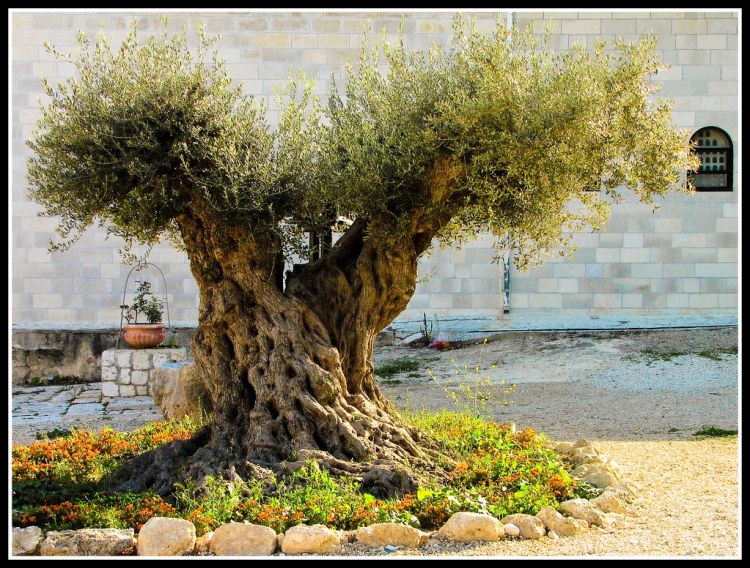
John the Baptist warned the self-righteous saying:
- “and do not think to say to yourselves, ‘We have Abraham as our father.’ For I say to you that God is able to raise up children to Abraham from these stones. “And even now the ax is laid to the root of the trees. Therefore every tree which does not bear good fruit is cut down and thrown into the fire. “I indeed baptize you with water unto repentance, but He who is coming after me is mightier than I, whose sandals I am not worthy to carry. He will baptize you with the Holy Spirit and fire. “His winnowing fan is in His hand, and He will thoroughly clean out His threshing floor, and gather His wheat into the barn; but He will burn up the chaff with unquenchable fire.” (Matthew 3:9-12)
In the book of Revelation, it is written:
- “But one of the elders said to me, “Do not weep. Behold, the Lion of the tribe of Judah, the Root of David, has prevailed to open the scroll and to loose its seven seals.” (Revelation 5:5)
- “I, Jesus, have sent My angel to testify to you these things in the churches. I am the Root and the Offspring of David, the Bright and Morning Star.” (Revelation 22:16)
The batch (“phyrama” – Strong’s G5445) in verse 16 refers to any substance mixed with water and kneaded; a mass, lump: of dough. Jesus often referred to the corruption of the entire collection or “mass of dough” being spoiled by bad teaching/doctrine (Refer to Matthew 16:6-12). So, in this instance, if a part of the collection or batch is holy (set apart by God from that which is unholy), then the entire batch from which it was taken is also holy to God. This batch was started with Abraham (Genesis 12:1-3) and the patriarchs (Genesis 15:14; Deuteronomy 7:6; Deuteronomy 14:2).
This is not a statement concerning eternal salvation; this is a statement that there is a set apart purpose by God for the batch.
The Jewish nation is holy although eternal salvation is individual as seen throughout the Old Testament where the LORD preserved a believing obedient remnant and destroyed the unbelieving.
As it is today, the believing remnant ofthe tribes of Israel is included in Paul’s teaching of the New Creation body of Christ. The remnant that will be saved in the future, after the church is gone, is still considered holy to the LORD. They will welcome Him back during the “time of Jacob’s trouble” (Jeremiah 30:7).
- “At that time Michael shall stand up, The great prince who stands watch over the sons of your people; And there shall be a time of trouble, Such as never was since there was a nation, Even to that time. And at that time your people shall be delivered, Every one who is found written in the book. And many of those who sleep in the dust of the earth shall awake, Some to everlasting life, Some to shame and everlasting contempt. … Then I heard the man clothed in linen, who was above the waters of the river, when he held up his right hand and his left hand to heaven, and swore by Him who lives forever, that it shall be for a time, times, and half a time; and when the power of the holy people has been completely shattered, all these things shall be finished. Although I heard, I did not understand. Then I said, “My lord, what shall be the end of these things?” And he said, “Go your way, Daniel, for the words are closed up and sealed till the time of the end. “Many shall be purified, made white, and refined, but the wicked shall do wickedly; and none of the wicked shall understand, but the wise shall understand. “And from the time that the daily sacrifice is taken away, and the abomination of desolation is set up, there shall be one thousand two hundred and ninety days. “Blessed is he who waits, and comes to the one thousand three hundred and thirty-five days. “But you, go your way till the end; for you shall rest, and will arise to your inheritance at the end of the days.” (Daniel 12:1-2, 7-13)
Jesus told a parable that reflects the Father’s heart towards a prodigal child. In this parable, the older son who stayed with the father questioned the elaborate celebration over the return of the younger son who left the father to chase after his desires. The father’s response was:
- “‘for this my son was dead and is alive again; he was lost and is found.’ And they began to be merry. … ‘It was right that we should make merry and be glad, for your brother was dead and is alive again, and was lost and is found.’ “ (Luke 15:24, 32)
Jesus wanted people to understand that the Heavenly Father did not want any of His children to be lost.
Who would the older son represent? The angels who remained loyal to God? A person who came to the Lord and never backslid? The church? Enoch, Abraham, Abel or other Old Testament saints? Does it matter?
Who would the younger son represent? Since the younger son turned around to go home to the father, wouldn’t the younger son represent every person who has repented and accepted God’s way of living?
Since every person is guilty of breaking God’s holy law regardless of the size of the infraction, all people require forgiveness from the Father who waits (with longsuffering) for the erroring child to turn around. This applies to the unbelieving children of Israel as well.
Is it arrogance to assume the prodigal son is someone else? The story is about the Father’s heart to forgive and welcome home with a full pardon!
The Pardoned Should Have Reverent Humility because God Decided the Means of Global Reconciliation (Romans 11:17-24)
In the previous segment, the cross-reference Psalm 52:8 tells us that Israel was called an ‘olive tree’. Here in Romans 11:17, we see Paul used this idiom of the olive tree to describe the cultivation of the LORD for both the covenant children of Israel (God’s elected, natural descendants of Abraham, Isaac, and Jacob) and the Gentile believers (God’s elected from all nations without natural lineage to Jacob). The Gentiles are referred to as the wild olive tree.

Jesus explained being part of God’s cultivation like this:
- “I am the true vine, and My Father is the vinedresser. “Every branch in Me that does not bear fruit He takes away; and every branch that bears fruit He prunes, that it may bear more fruit. “You are already clean because of the word which I have spoken to you. “Abide in Me, and I in you. As the branch cannot bear fruit of itself, unless it abides in the vine, neither can you, unless you abide in Me. “I am the vine, you are the branches. He who abides in Me, and I in him, bears much fruit; for without Me you can do nothing. “If anyone does not abide in Me, he is cast out as a branch and is withered; and they gather them and throw them into the fire, and they are burned.” (John 15:1-6)
Romans 11:17 – 24 (like John 15) refers to the Father’s choice. The church is to remember that we exist only because Christ builds His Church; Christ is the Vine and the Father is the One that chooses what to do with His possession. All souls are His (Ezekiel 18:4, Zechariah 12:1); the souls that are cast into the fire and the ones that are pruned.
The key message in this segment is those belonging to Christ’s vine, as offshoot branches (whether grafted in from a foreign vine, or the natural fatness of the vine) should have humility.
We should understand that our election is based on God’s choice to exercise the kindness of His grace or the strictest adherence to His righteousness!
Both “goodness” and “sternness” are words that describe God in verse 22 so let’s dig into it.
Terms and Their Definitions in Verse 22
- God’s goodness here is ”chréstotés” (Strong’s G5544). It carries the meaning of useful kindness and gentleness (Romans 2:4; Romans 11:22; 2 Corinthians 6:6; Galatians 5:22; Colossians 3:12; Titus 3:4) and of His beneficence in Ephesians 2:7. ”Chréstotés” (Strong’s G5544) comes from “chrestos” (Strong’s G5543) which means usefulness, i.e. morally excellent.
- The word is what God defines as kind – and therefore also eternally useful!
- “We have no adjective in English that conveys this blend of being kind and good at the same time” (M. Vincent).
- This word does not carry the meaning modern humanity ascribes to goodness or kindness.
- God’s sternness here is ”apotomia” (Strong’s G663). It carries the meaning of sharpness and steepness and is only used in Romans 11:22. This describes the nature of which something or someone is severed, or cut off. It is abrupt, precipitous like a cliff, rough, harsh and has rigour. This is consistent with intentionality, and decisiveness.
- This confirms what is known in Romans of God’s hardening a person in their choice to sin (Romans 9:18) which results in wrath (Romans 1:18; Romans 2:5, 8; Romans 3:5; Romans 5:9; Romans 9:22; Romans 12:19).
- “He who is often rebuked, and hardens his neck, Will suddenly be destroyed, and that without remedy.” (Proverbs 29:1)
In either case, He is just because He has the power of choice and sets the time and area boundaries for His creation. Paul preached by the Holy Spirit saying:
- “And He has made from one blood every nation of men to dwell on all the face of the earth, and has determined their preappointed times and the boundaries of their dwellings, so that they should seek the Lord, in the hope that they might grope for Him and find Him, though He is not far from each one of us; for in Him we live and move and have our being, as also some of your own poets have said, ‘For we are also His offspring.’ Therefore, since we are the offspring of God, we ought not to think that the Divine Nature is like gold or silver or stone, something shaped by art and man’s devising. Truly, these times of ignorance God overlooked, but now commands all men everywhere to repent, because He has appointed a day on which He will judge the world in righteousness by the Man whom He has ordained. He has given assurance of this to all by raising Him from the dead.” (Acts 17:26-31)
Using the New Living Translation, let’s consider a portion of the segment considering the consistency of Scripture.
- “But you must not brag about being grafted in to replace the branches that were broken off. You are just a branch, not the root. … Yes, but remember, those branches were broken off because they didn’t believe in Christ, and you are there because you do believe. So don’t think highly of yourself, but fear what could happen. For if God did not spare the original branches, he won’t spare you either. Notice how God is both kind and severe. He is severe toward those who disobeyed, but kind to you if you continue to trust in his kindness. But if you stop trusting, you also will be cut off.” (Romans 11:18, 20-22 NLT)

Therefore, if God appoints the times and boundaries of humanity (Acts 15:18; Genesis 9:19; Deuteronomy 32:7-8; Job 14:5; Romans 5:12-19; 1 Corinthians 15:22) and it is His choice to offer grace, we should have reverent humility in our placement within the church.
Paul was clear on God’s sovereign election and understood that there have always been self-deceived people within those assembling as the church. In verse 22, he reminded the Roman believers that God cut off those who were unbelieving (or disobedient) among the elect children of Israel. God is unchanging so the elect church can expect that God will likewise deal with those who attend church but are unbelieving (potentially evident to others by their disobedience or lack of fruit). These are the ones who say they are Christians but are not sealed by His Holy Spirit; they will likewise be separated. But one should be careful about how making determining judgments because only the Lord knows the heart and we are at differing stages of fruit bearing. Jesus said there could be both unbelieving and believing in an assembly this way:
- … “The kingdom of heaven is like a man who sowed good seed in his field; “but while men slept, his enemy came and sowed tares among the wheat and went his way. “But when the grain had sprouted and produced a crop, then the tares also appeared. “So the servants of the owner came and said to him, ‘Sir, did you not sow good seed in your field? How then does it have tares?’ “He said to them, ‘An enemy has done this.‘ The servants said to him, ‘Do you want us then to go and gather them up?’ “But he said, ‘No, lest while you gather up the tares you also uproot the wheat with them. ‘Let both grow together until the harvest, and at the time of harvest I will say to the reapers, “First gather together the tares and bind them in bundles to burn them, but gather the wheat into my barn.” ‘ “ (Matthew 13:24-30)
Peter stated the same fact in this way:
- “Therefore gird up the loins of your mind, be sober, and rest your hope fully upon the grace that is to be brought to you at the revelation of Jesus Christ; as obedient children, not conforming yourselves to the former lusts, as in your ignorance; but as He who called you is holy, you also be holy in all your conduct, because it is written, “Be holy, for I am holy.” And if you call on the Father, who without partiality judges according to each one’s work, conduct yourselves throughout the time of your stay here in fear; knowing that you were not redeemed with corruptible things, like silver or gold, from your aimless conduct received by tradition from your fathers, but with the precious blood of Christ, as of a lamb without blemish and without spot. He indeed was foreordained before the foundation of the world, but was manifest in these last times for you who through Him believe in God, who raised Him from the dead and gave Him glory, so that your faith and hope are in God. Sinceyou have purified your souls in obeying the truth through the Spirit in sincere love of the brethren, love one another fervently with a pure heart, having been born again, not of corruptible seed but incorruptible, through the word of God which lives and abides forever,” (1 Peter 1:13-23)
Our eternal and omniscient LORD, from outside of time chose who, when, and how. Our response should be that of (1) a desire to see others (who will respond in faith) come to Christ before the great time of testing and judgment; and, (2) thankfulness for His kindness to save us eternally and spare us from the time of wrath that is to come.
- “But concerning the times and the seasons, brethren, you have no need that I should write to you. For you yourselves know perfectly that the day of the Lord so comes as a thief in the night. For when they say, “Peace and safety!” then sudden destruction comes upon them, as labor pains upon a pregnant woman. And they shall not escape. … But let us who are of the day be sober, putting on the breastplate of faith and love, and as a helmet the hope of salvation. For God did not appoint us to wrath, but to obtain salvation through our Lord Jesus Christ, who died for us, that whether we wake or sleep, we should live together with Him. Therefore comfort each other and edify one another, just as you also are doing. … See that no one renders evil for evil to anyone, but always pursue what is good both for yourselves and for all. Rejoice always, pray without ceasing, in everything give thanks; for this is the will of God in Christ Jesus for you. Do not quench the Spirit. Do not despise prophecies. Test all things; hold fast what is good. Abstain from every form of evil. Now may the God of peace Himself sanctify you completely; and may your whole spirit, soul, and body be preserved blameless at the coming of our Lord Jesus Christ. He who calls you is faithful, who also will do it.” (1 Thessalonians 5:1-3, 8-11, 15-24)
We should also continue to examine our hearts to ensure we are not deceiving ourselves. The regenerated heart willfully mourns sin and responds in repentance. The deceived heart does not hate their sin.
The redeemed turns away from sin and looks to our Saviour in full trust and confidence that He will continue to sanctify us.
Do not forget that when Christ preached repentance, the children of Israel were steeped in their traditions and a great many would not turn to accept His message of salvation through faith in Him, the provision of the final Lamb of God. The nation did not perceive that a new age had started. They were deceived by thinking their works and traditions were sufficient; and, therefore were blinded by a veil.
Be careful about complacency and passivity. Make certain you are growing and that the works of Christ’s salvation in you are complete.
- “This is the message which we have heard from Him and declare to you, that God is light and in Him is no darkness at all. If we say that we have fellowship with Him, and walk in darkness, we lie and do not practice the truth. But if we walk in the light as He is in the light, we have fellowship with one another, and the blood of Jesus Christ His Son cleanses us from all sin. If we say that we have no sin, we deceive ourselves, and the truth is not in us. If we confess our sins, He is faithful and just to forgive us our sins and to cleanse us from all unrighteousness. If we say that we have not sinned, we make Him a liar, and His word is not in us.” (1 John 1:5-10)
The Appointed Time for the Partial Hardening to Cease (Romans 11:25-32)
This segment starts with identifying that God has concealed parts of His plan through the ages. His mention of God’s intentional cloaking of future events is not only addressed in this segment of Romans; it is throughout his writings. For example, Paul wrote to the Corinthians:
- “… we speak wisdom among those who are mature, yet not the wisdom of this age, nor of the rulers of this age, who are coming to nothing. But we speak the wisdom of God in a mystery, the hidden wisdom which God ordained before the ages for our glory, which none of the rulers of this age knew; for had they known, they would not have crucified the Lord of glory.” (1 Corinthians 2:6-8)
This passage shows us that God has a purpose for concealing certain things. What are some of the mysteries in Scripture that are available for study but remain unclear to the unbelieving?
- Mystery of the Kingdom of God (Mark 4:11; Luke 8:10)
- Mystery of the Kingdom of Heaven (Matthew 11:12; Matthew 13:11; Daniel 2:44)
- Mystery of the Incarnation (1 Timothy 3:16; Colossians 2:2-3; Colossians 4:3)
- Mystery of Israel’s Interim Blindness (Daniel 9:25; Hosea 5:15; Matthew 23:37-39; Luke 19:42, 44; Luke 21:24)
- Mystery of Salvation by Faith (1 Timothy 3:9; Ephesian2:8-10)
- Mystery of the Gentile Fellow heirs (Romans 16:25; Ephesians 6:19; Ephesians 3:3-6; Ephesians 3:9-10; Colossians 1:26-28)
- Mystery of the Seven Churches (Revelation 1:20)
- Mystery of the Church’s Catching Away (1 Corinthians 15:51-52; 1 Thessalonians 4:13-18; John 14:1-3; Isaiah 26:19-21; Zephaniah 2:3; Ephesians 5:31-32)
- Mystery of the Bride of Christ (Revelation 19:7-9; Matthew 22:1-14; 1 John 2:28 2 John 1:8; Revelation 3:18; Revelation 16:15)
- Mystery of Iniquity (2 Thessalonians 2:7-8)
- Mystery Babylon (Revelation 17:5-7)
- Mystery of God’s Plan for the End of the Ages (Ephesians 1:9-10; 1 Corinthians 15:27-28; Ephesians 2:6-7; Revelation 10:7)
Each of these mysteries makes a great study if you wish to dive into them. For this study, we will focus on Romans 11 starting at verse 25.
Paul explained that the partial hardening of Israel would end at an appointed time resulting in the nation of Israel being saved because God will fulfill all that has been written. Having warned them sternly in Romans 11:22, he then quoted part of Isaiah 59:20 & 21 in Romans 11:26. Let’s look at verses 25 to 28:
- “I do not want you, believers, to be unaware of this mystery [God’s previously hidden plan] so that you will not be wise in your own opinion, that a partial hardening has [temporarily] happened to Israel [to last] until the full number of the Gentiles has come in; (Romans 11:25 AMP)
- “And so all Israel will be saved, as it is written: “The Deliverer will come out of Zion, And He will turn away ungodliness from Jacob;” (Romans 11:26)
- “As far as the gospel is concerned, they are enemies for your sake; but as far as election is concerned, they are loved on account of the patriarchs,” (Romans 11:28 NIV)
If you are studying both Old Testament and New Testament prophecy, please notice the distinction between
(1) the times of the Gentiles (that end of the Great Tribulation at Christ’s Return – Luke 21:24- 28); and,
(2) the number of Gentiles (to be saved by grace pre-Great Tribulation while the children of Israel are generally in unbelief).
- It will be extremely difficult for anyone who wants to come to the LORD during that future time. (Refer to Revelation 13). This too is a separate study.
Once the number of Gentiles who were appointed to the church (by God before time began) have reached fulfillment, the temporary veil will be withdrawn from Jacob’s descendants. At that time, the remaining children of Israel (whom God elected before time began) will receive Jesus as their Messiah and will be saved!
It is a human construct to believe that God needs to treat everyone identically throughout the ages.
The things to consider here about God’s character are:
- God’s sovereignty as the Creator and Owner of all souls rightfully supports His power of choice (to do as He wills with His creation);
- God’s justice rightly applies the penalty for disobedience and rewards according to deeds;
- God’s grace sovereignly assigns favour as He wants to and grants mercy without deeds;
- God’s holiness means He is different from His creation; He is divine, pure, undefiled by sin, free from wickedness, and governs Himself by His immutability.
Now, with this in mind, those who are saved can certainly be thankful for this verse!
- “For the gifts and the calling of God are irrevocable.” (Romans 11:29)
This is a great comfort!
If God has called a person to faith in Christ (Jew or Gentile), He does not change His mind about those to whom He gives His grace or sends His call. If God has given you eternal life, He does not withdraw His gift .
- “God is not a man, that He should lie, Nor a son of man, that He should repent. Has He said, and will He not do? Or has He spoken, and will He not make it good?” (Numbers 23:19)
- “For I am the LORD, I do not change; Therefore you are not consumed, O sons of Jacob.” (Malachi 3:6)
The reinstatement of the Apostle Peter after his denial of Jesus is a great example of how the LORD will seek out His own to restore fellowship with Him. And, remember, Jesus had foreknown and forewarned Peter of this.
- “And the Lord said, “Simon, Simon! Indeed, Satan has asked for you, that he may sift you as wheat. “But I have prayed for you, that your faith should not fail; and when you have returned to Me, strengthen your brethren.” But he said to Him, “Lord, I am ready to go with You, both to prison and to death.” Then He said, “I tell you, Peter, the rooster shall not crow this day before you will deny three times that you know Me.” (Luke 22:31-34)
Peter did not re-establish his place with the disciples. Jesus did in John 21:1-19. He even affirmed what Peter’s assignment was (now that Peter was humbled by his inability to withstand testing independently.) Now Peter better understood that without Christ’s empowerment, no one can stand against all the pressures of this life. At the fall, we had all been handed over to disobedience.
It is only by God’s grace (His favour, Divine influence and power to believe, and His strength to choose change) that His mercy is available to those He calls in the times He calls them.
We should be thankful for (1) the nation of Israel that preserved God’s Word; (2) the Jewish Apostles who spread the gospel; and, (3) for God’s sovereign handling of humanity.
- “For as you were once disobedient to God, yet have now obtained mercy through their disobedience, even so these also have now been disobedient, that through the mercy shown you they also may obtain mercy. For God has committed them all to disobedience, that He might have mercy on all.” (Romans 11:30-32)
Friends, this is more about God demonstrating His sovereignty with His mercy and goodness than it is about the objects of His benevolence.
Humanity is too self-centred! We are so busy admiring a fine piece of art that we fail to recognize the Artist’s thought and ability.
God’s Plan Mystifies All of Creation (Romans 11:33-36)
The Godhead has given mankind everything they need for life and godliness. Some people have difficulty understanding how a loving God can make choices surrounding the end state of the individual. It’s as though humanity has regressed to a point where they believe they can tell the Creator who He ought to be, or what rules (if any) He should govern us by. Perhaps many have bought into the original lie:
- “… the serpent said to the woman, “You will not surely die. “For God knows that in the day you eat of it your eyes will be opened, and you will be like God, knowing good and evil.” (Genesis 3:4-5)
If our history teaches us anything, we should realize that humanity has repeatedly failed to be like God, and our fallen nature (without God’s intervention) causes strife, hatred, evil, and ultimately death.
Some are hoping to bring order out of chaos without the LORD. Others are trying to tear down current institutions and foundations to build something entirely new (without concern for the harm being caused by the strategies). Is that the change and the world we are seeking?
Friends, God reigns above all earthly kingdoms and allows human beings to exercise their will within His plan. There is a change coming! A time has been set. You need to be ready!
My prayer is that all who read and understand will humble themselves to seek and obey the One who will renovate this planet and bring in His kingdom.
- “Who has directed the Spirit of the LORD, Or as His counselor has taught Him?” (Isaiah 40:13)
- “For who has stood in the counsel of the LORD, And has perceived and heard His word? Who has marked His word and heard it?” (Jeremiah 23:18)
- “Who has preceded Me, that I should pay him? Everything under heaven is Mine.” (Job 41:11)
God has revealed what He wants us to know and it is sufficient information to hear and understand His call.
Will you turn away from this world’s pattern of sin, receive His Spirit, abide in His truth, and love Him and others? Are you ready for the coming change? Will you worship the One who is worthy of all glory?
- “Oh, the depth of the riches both of the wisdom and knowledge of God! How unsearchable are His judgments and His ways past finding out! “For who has known the mind of the LORD? Or who has become His counselor?” “Or who has first given to Him And it shall be repaid to him?” For of Him and through Him and to Him are all things, to whom be glory forever. Amen.” (Romans 11:33-36)
 DesiringFruitfulness
One thought on “Expect Change at the Fullness of the Gentiles (Romans 11)”
Comments are closed.