

There is an idiom that goes like this: “unable to see the forest for the trees”. In chapter 1 John 4, the Apostle John gives direction to see through a forest of various trees (so to speak) by simply looking up to the Source of life and love. Are you trying to sort out what’s right? Are there too many voices with varying ideas? Don’t look inward or sideways to others. Instead, look up to the Father and Son – the Makers and Sustainers of heaven and earth; the Saviour of the world.
What is the Big Idea in 1st John 4?

Chapter at a Glance
It’s all about God’s love in and through Christ Jesus. In a world of deception, delusion, despair, darkness and dread, God’s love radiates brighter and provides the way forward into true thinking, togetherness, triumph, trust and thanksgiving.

From the epistle’s keywords, we see the emphasis on LOVE in the chapter we are reviewing (27 times in 21 verses)”. These metrics were counted using NASB95 (there are minor count variations in other English translations).
| Context (Chapter/Segment) | Sin(s) | Know(s/n) | Love(s) | Abide(s) |
|---|---|---|---|---|
| Entire Chapter: 1 John 4 | 1 | 7 | 27 | 6 |
| All Chapters | 26 | 40 | 46 | 22 |
In chapter 3, it was made abundantly clear that children of God are holy from the point of regeneration with His birthmarks of:
- love for Him and each other; resulting in,
- obedience to Christ’s teaching.
Why go deeper into these topics in chapter 4? In today’s world of 30-character sound bites, this might be considered redundant to some.
The eternal and omniscient God was well aware that spiritual forces war against God’s children and He overcomes evil with the power and authority of His goodness and truth. He imparts the ability to withstand the adversarial force of evil and overcome through all that flows from His Spirit of truth and love!
Please read 1 John 4. In chapter 4, the Holy Spirit (through John) countered target false ideologies (which still exist today) with truth from Christ’s teachings. Rather than incorporate these false beliefs into the Scripture, John instructed the church on the:
- identification of the Spirit of God (love and truth) in contrast to the spirit of the antichrist (self and falsehood),
- truth that God is love and is greater than sin (the simplicity and truth of the Gospel); and
- confidence the redeemed have in the day of judgment is based on the love that the Spirit of God produces.
These three points form my segmentation and approach for highlighting my observations. Perhaps your study will highlight others.
The Main Point in This Study
God’s love through Christ Jesus manifested in the believer overcomes every evil!
- You are of God, little children, and have overcome them, because He who is in you is greater than he who is in the world. (1 John 4:4)
The enemy has laid traps and shrouds of darkness and deception. It’s not that there won’t be mistakes, temptations, trials or hardships for the believer! There will be. So know this:
- Our salvation does not rest on our ability to (1) attain certain knowledge or (2) be perpetually correct in all things.
- The Source and Object of our faith is the strength and the illumination to overcome every evil and keep us until the day of perfection. As Jesus said:
- “… in Me you may have peace. In the world you will have tribulation; but be of good cheer, I have overcome the world.” (John 16:33b)
- My sheep listen to my voice; I know them, and they follow me. I give them eternal life, and they shall never perish; no one will snatch them out of my hand. My Father, who has given them to me, is greater than all; no one can snatch them out of my Father’s hand. (John 10:27-29 NIV)
It is also written:
- “He who overcomes shall inherit all things, and I will be his God and he shall be My son. (Revelation 21:7)
Background
1st John was written between 85 A.D and 95 A.D. At this point in human history:
- Greek and Roman philosophies were well-established;
- some Jews had accepted Christ while others rejected Him; and,
- Gentiles were being evangelized, many turning to faith in Christ alone for redemption.
Anyone who believed that Jesus was the resurrected Messiah and Son of God, was brought into fellowship with God and each other. The Apostles were teaching the church what Christ taught them.
Gnosticism was emerging at this time and the enemy tried to sow lies and false teachings within the church. Recent converts from Gnosticism to Christianity needed encouragement and instruction. False converts who held to Gnostic beliefs were to be identified because their teachings could:
- result in stunting the fellowship with the Lord; or,
- confuse those who were to come to Christ.
John loved the Lord and desired what He wanted (fellowship in love with the Father, Son and each other (1 John 1:3). He warned in his 2nd letter about those who are not steadfast in, Christ’s teachings (going past what is right or proper):
- Anyone who does not remain in Christ’s teaching but goes beyond it does not have God. The one who remains in that teaching, this one has both the Father and the Son. (2 John 1:9 CSB)
False Belief
Consequence of False Beliefs
- False: The spirit is good and separate from evil matter so the spirit cannot be defiled based on the activity of a physical body.
- Disbelief that God became flesh since matter is evil. Consequentially:
- Incorrect belief that Christ was a spirit who only appeared to have a body.
- Disbelief in the deity of Jesus as the God-Man.
- Disbelief that the Son of God died; belief that Jesus (solely human) died.
- Disbelief that Jesus rose from the dead and ascended to Heaven in bodily form (where He lives and makes intercession for believers).
- Disbelief in the Genesis account of creation because God (a spirit) could not create a universe containing matter (evil).
- False: Achieving higher knowledge that surpasses God’s revelation through Christ, the Apostles and the prophets (captured in the Bible) was the way to reach the Divine.
- Disbelief that Jesus Christ (the GodMan) was the perfect sufficient atonement for sin; redemption by Jesus Christ has not been achieved. Consequentially:
- Faith in Christ and adherence to His teachings had no bearing on daily life or eternal life.
- Believers who relied solely on Christ’s sacrifice for sin did not possess higher knowledge.
Now, let’s briefly review the chapter in segments and note some insights. What observations have you made? Did any modern false teachings come to mind?
Segment Insights
Segment 1: The Identification of the Spirit of God Versus the Spirit of Antichrist
- Verses 1 – 6: Now that Christ had ascended with the promise to return, the enemy of God (being unequal to Him) had ramped up his strategy (1 John 2:18, 22) to (1) deceive the world with doctrinal errors and (2) enslave those born of God through licentious enticements.
- Since the enemy cannot overcome God’s authority and power, these spiritual attacks tried to hamper (1) fellowship and (2) kingdom effectiveness.
- The purpose of this segment is to strengthen God’s children with truth and instruction so that they will not be deceived by the false prophets (who being spiritually dead are themselves deceived).
- These individuals are not necessarily ignorant of God’s word; rather, they are deceptive individuals who are promoting incorrect information that opposes the Deity and Humanity of Jesus Christ and therefore His sufficiency for eternal life.
- They claim a different way to achieve eternal life (i.e. higher knowledge, good works/performance, faith in someone or something other than Jesus, denying the sufficiency of Christ’s atonement); or,
- They deny God’s love, deny God’s existence, and deny God expects holiness from humans (as expressed in His Word).
- You can identify these individuals because their worldview aligns with the world’s immoral freedom and unsubstantiated theories which are in direct opposition to the teachings of Christ and the original Apostles (eyewitnesses commissioned by the Lord).
- The authority or influence of these false prophets comes from the spirit of the antichrist.
- Their claims are based on their experiences (lying wonders –2 Thessalonians 2:8-10) and or selfish schemes.
- They focus on self-promotion, inward centring, and grounding with forces around them. These are contrary to simplicity and purity of faith in and reliance on Christ’s finished work, and His Spirit.
- In contrast, you can tell those who are born of God because they listen to the teachings of Christ (the Spirit of Truth) and submit to His authority. As the Creator and Owner of the universe, Jesus said with all authority:
- “Beware of false prophets, who come to you in sheep’s clothing, but inwardly they are ravenous wolves. “You will know them by their fruits. Do men gather grapes from thornbushes or figs from thistles?” (Matthew 7:15-16)
- “Therefore My Father loves Me, because I lay down My life that I may take it again. “No one takes it from Me, but I lay it down of Myself. I have power to lay it down, and I have power to take it again. This command I have received from My Father.” (John 10:17-18)
- “However, when He, the Spirit of truth, has come, He will guide you into all truth; for He will not speak on His own authority, but whatever He hears He will speak; and He will tell you things to come. “He will glorify Me, for He will take of what is Mine and declare it to you. “All things that the Father has are Mine. Therefore I said that He will take of Mine and declare it to you.” (John 16:13-15)
- These individuals are not necessarily ignorant of God’s word; rather, they are deceptive individuals who are promoting incorrect information that opposes the Deity and Humanity of Jesus Christ and therefore His sufficiency for eternal life.
- Now that the victorious Christ had ascended with the promise to return, the defeated enemy of God and our souls had ramped up his strategy to deceive the world with doctrinal errors and enslave those born of God through enticements that go beyond the freedoms given by the Lord.
Segment 2: God is Love and is Greater than Sin (the Simplicity and Truth of the Gospel)
- Verse 7-14: In the past, the Godhead was revealed in many ways through the prophets. At the appointed time, He spoke to us through His Son (who in His character and nature is the exact representation of the Father) incarnate. Jesus demonstrated Divine love for His Father and humanity by obedience to the Father’s plan of redemption which necessitated laying down His sinless life to pay the price of sin for the entire world. (Hebrews 1:1-3, Colossians 1:16-18, John 1:14,17-18, Isaiah 9:6, Isaiah 53:10-11)
- God’s righteous requirement for granting a full pardon with reconciliation to Him is to believe Him, to believe what He said (which is a direct contrast to the first sin). God wants you to believe He gave his only Son so that you can be reconciled and baptized in the Holy Spirit.
- God ensured prophecy would foretell of His Son’s coming over 400 and 700 years before John the Baptist identified the Lamb of God, His Son. The following references provide additional information from the prophets Isaiah and Malachi, and what the Apostle John documented concerning John the Baptist’s witness of Christ: Malachi 3:1, Isaiah 40:3-5, John 1:6-7, John 1:15-17.
- Jesus is the only One who died, was buried, resurrected on the third day (all according to ancient prophecies – 1 Corinthians 15:2-8), and ascended in human form into heaven in the sight of eyewitnesses – many of whom later became martyrs for His name. So, regardless of anyone else’s claims or teachings, this same Jesus (whom death could not hold) said:
- “No one has ascended to heaven but He who came down from heaven, that is, the Son of Man who is in heaven. And as Moses lifted up the serpent in the wilderness, even so must the Son of Man be lifted up, that whoever believes in Him should not perish but have eternal life. For God so loved the world that He gave His only begotten Son, that whoever believes in Him should not perish but have everlasting life. For God did not send His Son into the world to condemn the world, but that the world through Him might be saved. (John 3:13-17)
- Despite our sins, God’s love expressed in Christ’s sacrifice made the way for human reconciliation with the Father. He knew the sum and depravity of all sin before He paid the price for it. He set the terms of salvation (faith) before the foundation of the world (Ephesians 1).
Christ’s loving and sinless atonement is greater than all sin. We simply need to receive His gift of love and come into a relationship with Him.
- Because God is love and He has given believers His Spirit, we love others with His holy and righteous love which is obedient to the Father and sacrificial by nature.
- This is not about feelings; it is about God’s love in us for other’s eternal salvation. The Apostle wrote 1 John in Ephesus. The Apostle Paul wrote to the church at Ephesus with the same message as 1 John 4:7 and 11 saying:
- Therefore be imitators of God as dear children. And walk in love, as Christ also has loved us and given Himself for us, an offering and a sacrifice to God for a sweet-smelling aroma. … Let no one deceive you with empty words, for because of these things the wrath of God comes upon the sons of disobedience. … For you were once darkness, but now you are light in the Lord. Walk as children of light (Ephesians 5:1-2, 6, 8)
- Christ is the picture of Scriptural love and meekness (His love caused Him to keep His strength under His control and remain on the cross). He is our model of love.
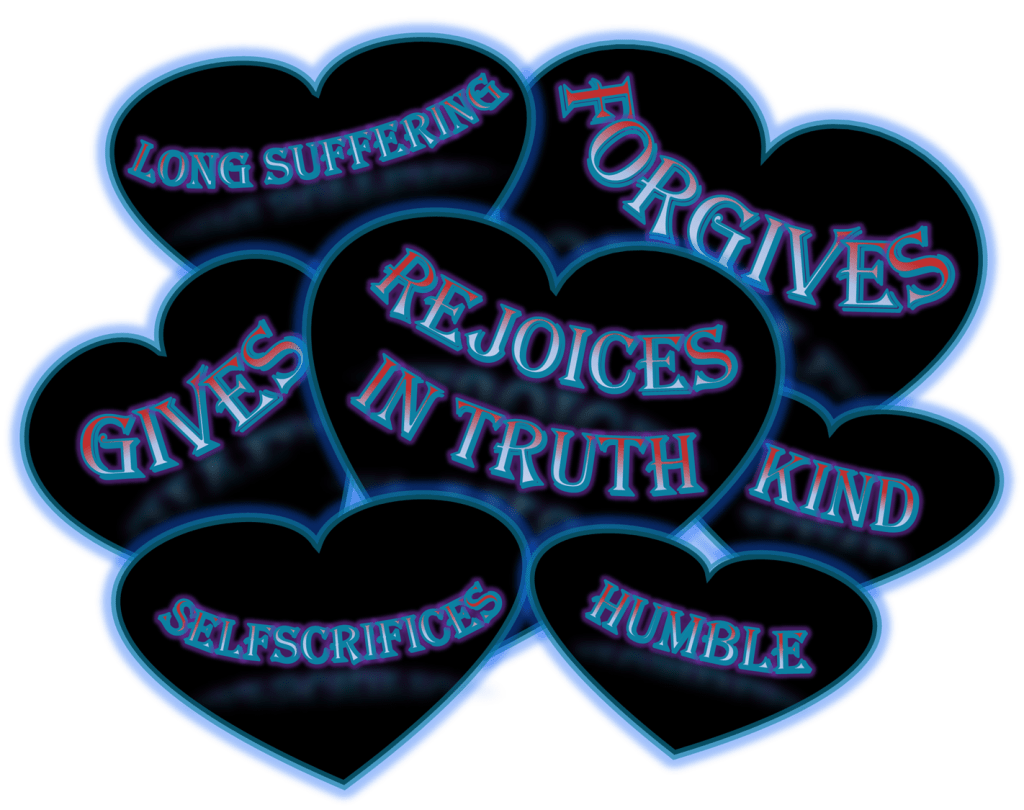
Paul expanded on this type of love which (1) limits “feelings” as the indicator of love, and (2) emphasizes “doing what is best” for the other.
Love suffers long and is kind; love does not envy; love does not parade itself, is not puffed up; does not behave rudely, does not seek its own, is not provoked, thinks no evil; does not rejoice in iniquity, but rejoices in the truth; bears all things, believes all things, hopes all things, endures all things. (1 Corinthians 13:4-7)
The simplicity of the gospel is that we are saved through faith in Jesus Christ by God’s grace. None of us loved God before we received Christ and we certainly did not (could not) earn it!
Segment 3: The Confidence the Redeemed have in the Day of Judgment is Based on The Love the Spirit of God Produces in Those who Abide.
- Verse 15-21: For this segment, I’ll refer to another letter the Apostle John sent to Ephesus on behalf of Jesus Christ.
- “To the angel of the church in Ephesus write: ‘The words of him who holds the seven stars in his right hand, who walks among the seven golden lampstands. “‘I know your works, your toil and your patient endurance, and how you cannot bear with those who are evil, but have tested those who call themselves apostles and are not, and found them to be false. I know you are enduring patiently and bearing up for my name’s sake, and you have not grown weary. But I have this against you, that you have abandoned the love you had at first. Remember therefore from where you have fallen; repent, and do the works you did at first. If not, I will come to you and remove your lampstand from its place, unless you repent. Yet this you have: you hate the works of the Nicolaitans, which I also hate. He who has an ear, let him hear what the Spirit says to the churches. To the one who conquers I will grant to eat of the tree of life, which is in the paradise of God.’ (Revelation 2:1-7 ESV)
- The Lord had complimented the church at Ephesus for their labour, endurance, and discernment, but He called for repentance for abandoning the priority of love (which they initially walked in). He warned that their congregation (their lampstand) would be removed from their place among the churches as a light (illuminating influence) to the world if they did not return to loving Christ full-heartedly. Jesus prayed for future believers on the night He was betrayed saying:
- “I do not pray for these alone [the disciples], but also for those who will believe in Me through their word; “that they all may be one, as You, Father, are in Me, and I in You; that they also may be one in Us, that the world may believe that You sent Me. “And the glory which You gave Me I have given them, that they may be one just as We are one: “I in them, and You in Me; that they may be made perfect in one, and that the world may know that You have sent Me, and have loved them as You have loved Me. (John 17:20-23)
- We are commanded to correct false doctrine because of our love for Christ and to help others inherit the Kingdom of God. God is love. So, if our motives and focus change from His love when confronting error, we do not remain (abide) in His love.
- When we walk in love for Him and others, regardless of our failures (or theirs), we will have confidence (and not be ashamed) in the day of judgment because we are in Him; we are accepted in the beloved, perfected or completed by His love.
- … we should no longer be children, tossed to and fro and carried about with every wind of doctrine, by the trickery of men, in the cunning craftiness of deceitful plotting, but, speaking the truth in love, may grow up in all things into Him who is the head – Christ … if indeed you have heard Him and have been taught by Him, as the truth is in Jesus: that you put off, concerning your former conduct, the old man which grows corrupt according to the deceitful lusts, and be renewed in the spirit of your mind, and that you put on the new man which was created according to God, in true righteousness and holiness. … And do not grieve the Holy Spirit of God, by whom you were sealed for the day of redemption. Let all bitterness, wrath, anger, clamor, and evil speaking be put away from you, with all malice. And be kind to one another, tenderhearted, forgiving one another, even as God in Christ forgave you. (Ephesians 4:14-15, 21-24, 30-32)
- The Apostle Paul preached the gospel at Ephesus around 54 A.D. (Acts 19) and wrote the above instruction to them in 62 A.D. Then the Apostle John wrote his letter of love from Ephesus to all believers sometime between 85 A.D and 95 A.D.
- Christ dictated a letter of correction to the Apostle John on the Isle of Patmos for the church at Ephesus around 95 A.D.
Application (Self-Examination):
- What misconceptions have I adopted from the world concerning “truth” and “love”? How do I love and tell the truth at the same time?
- What influences hinder my love for Christ (obedience to His Word) and fellowship with believers? What am I going to do about it?
- What areas of my life (over time) have become less devoted to Christ and His command to love others? Am I still on fire for Christ and His teachings?


Next Steps: Read 1st John 5

What Can You Do?
- We are almost done with this “lite” series study which has been convicting, deep, and so very reassuring!
- Please read 1st John 5 which is the last chapter. Remember to pray first.
- What is your conclusion and confidence?
What I Will Do
- I will pray that the Lord will help me love Him and others more. Most of us do not love everyone we encounter as Christ did. Too much “self” remains making it difficult to do sacrificially what is best for others.
- I will pray that those in Christ will have full assurance of their eternal life by the end of this series!
- I will pray that those who read this study blog but do not yet know the love of Christ, will without delay run into His open arms and find their rest and seat in Him.
What are the Series Objectives?
- Understand the evidence of eternal salvation with its instructions and warnings. This is something we need to be sure of now.
- Celebrate the assurance we have in Christ; deepen our fellowship with the Father and His family.
- Identify and take any corrective actions.
All Scripture in this blog is from the New King James Version unless otherwise specified.
 DesiringFruitfulness